Chimney and Roof Condition Survey, Exmouth
No leak, no emergency. A homeowner who wanted a proper photographic record of her roof before deciding what to spend money on. The chimney turned out to be carrying almost everything.
- Flown
- 4 April 2026
- Location
- Exmouth, Devon
- Client
- Julia
- Chimney pots checked
- Eight, none capped
What we were asked to do
Julia asked for a general condition assessment of the roof covering, the chimney stack, the valleys and the various roof structures around the building. She was already aware of some wear and wanted a clear photographic record of where things actually stood.
There was no water getting in at the time of the survey. This is the job people put off, and it is the one that gives you the most control, because you are choosing the order of the work rather than reacting to a leak.
Where
A detached two storey house in Exmouth. Plain clay tile hipped main roof, a central chimney stack rising off the main ridge, a flat lead covered canopy over the front bay, a single storey side extension and a glazed conservatory to the rear.
What we flew
Flown overcast and dry with a light wind, which gives flat neutral light and is better for condition work than bright sun. All four elevations were inspected, with overhead passes across the main and extension roofs and close telephoto imagery of the stack, the valleys, the ridge tiles and the flashing junctions.
The full image library went to the client along with the report, not just the frames that made it into the write up.
What it achieved
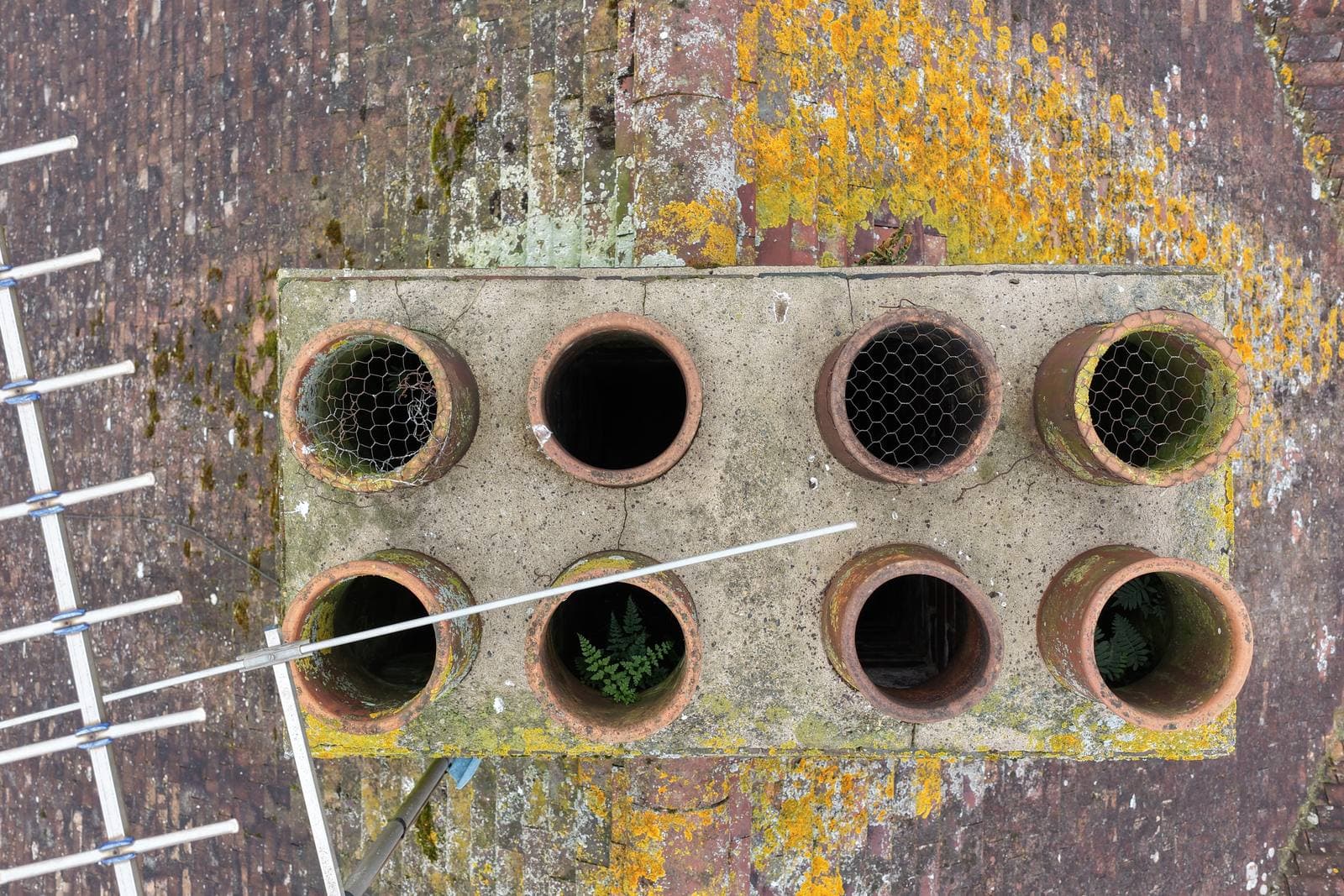
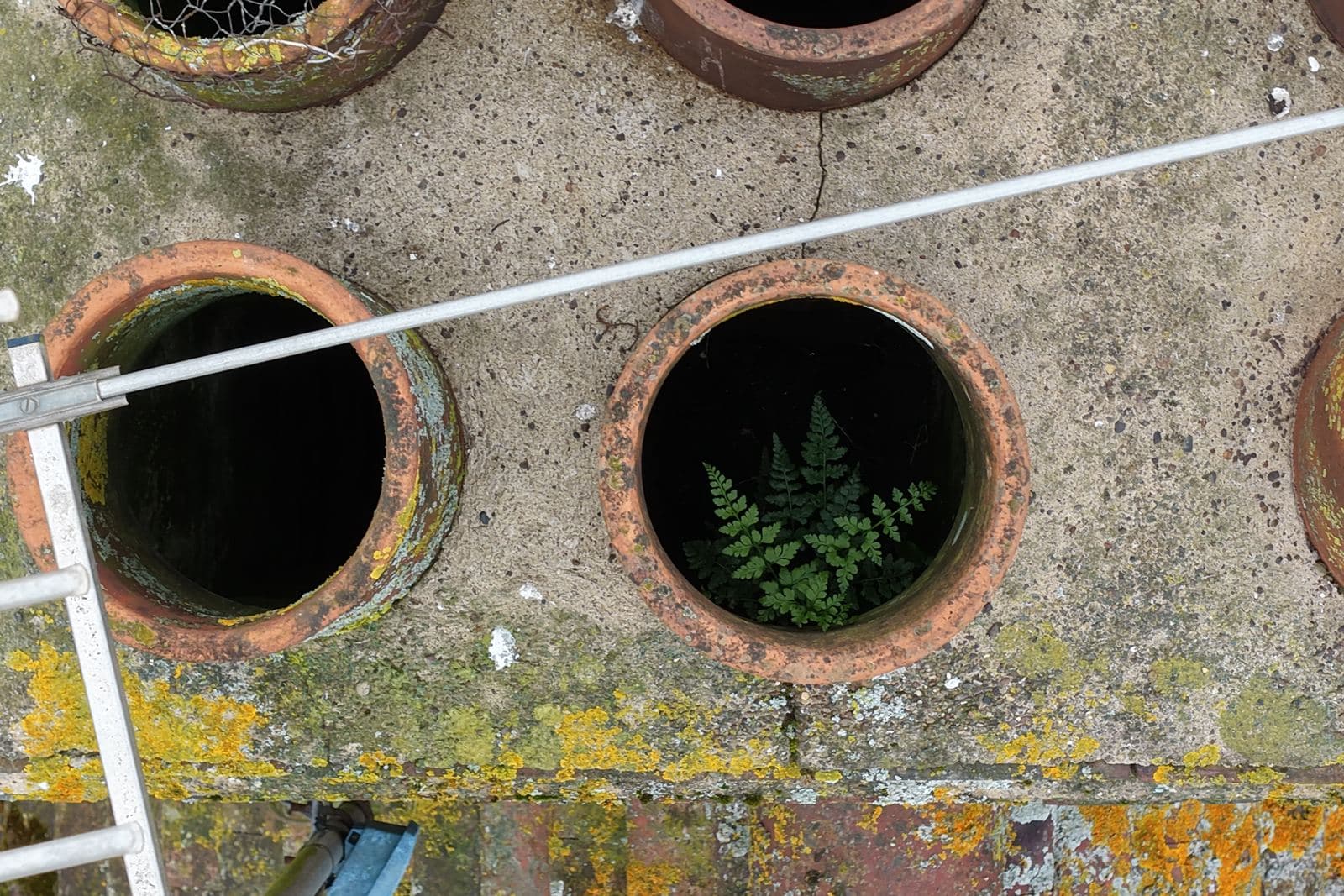
The chimney was the defect rich element and took most of the report. Eight terracotta pots sit on the stack in a four by two grid, and the flues are no longer in use. Not one of the eight was properly capped. Several had loose pieces of chicken wire laid over the top, which is not capping in any meaningful sense, and the rest were open straight to the flue. One open pot had a fern growing inside it.
That matters more than it sounds. With the flues out of use there is no draught to dry the stack, so rain and debris coming in through open pots sit there and work on the flue from the inside. Proper bird and rain guards on all eight was the first recommendation.
Also on the stack: cracking through the cement flaunching that beds the pots, and a second fern growing out of a mortar joint in the upper brickwork, which is a reliable sign of an open joint holding water. The lead flashing at the base of the stack looked serviceable.
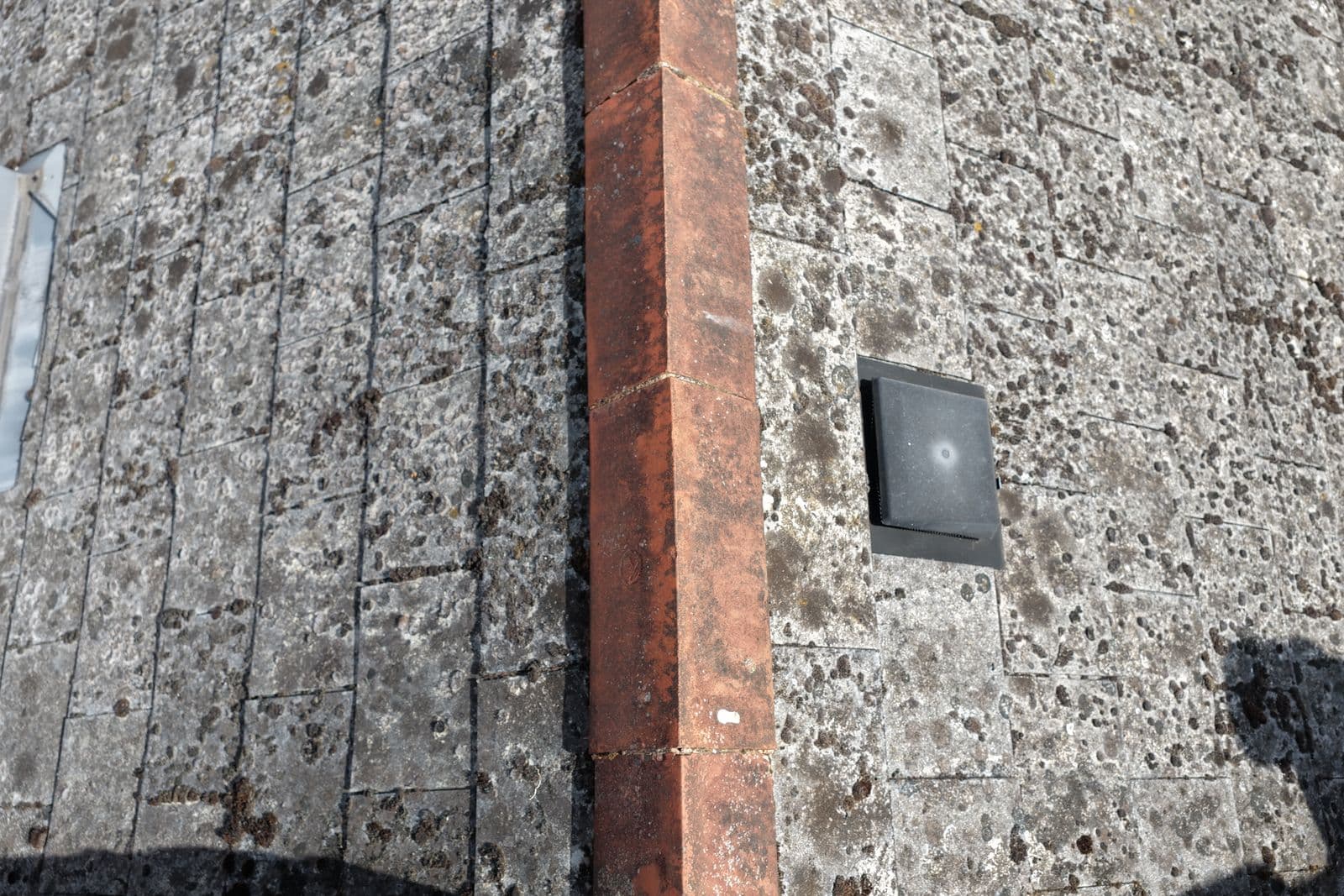
Three damaged tiles were found, all at ridge or hip positions where water concentrates: a cracked plain tile below the rear ridge under a spot the birds clearly use, a corner tile at the front hip with a mortar patch bedded into the missing corner, and a broken bonnet tile on the side hip with a hole straight through it. The bonnet was the one flagged for priority replacement, because a hole at a hip junction is a direct way in.
The rest was recorded and grouped so the tile work could be done on the same access visit as the chimney: heavy oxidation on the lead bay canopy with vegetation in the joint behind it, efflorescence streaking a small angled roof section at the front which points at a moisture path through the wall above, and heavy moss filling the cut tile valleys.
Imagery
Frames captured on the day, cropped and resized for the web.
Drone Roof Surveys
100MP aerial roof inspections without scaffolding. Detailed imagery of every tile, ridge, and flashing.
See what is includedMore Missions
Other jobs from the flight log.
Ready to Book Your Drone Survey?
Get a detailed aerial inspection of your roof without scaffolding, ladders, or risk. Contact us today for a free, no-obligation quote.