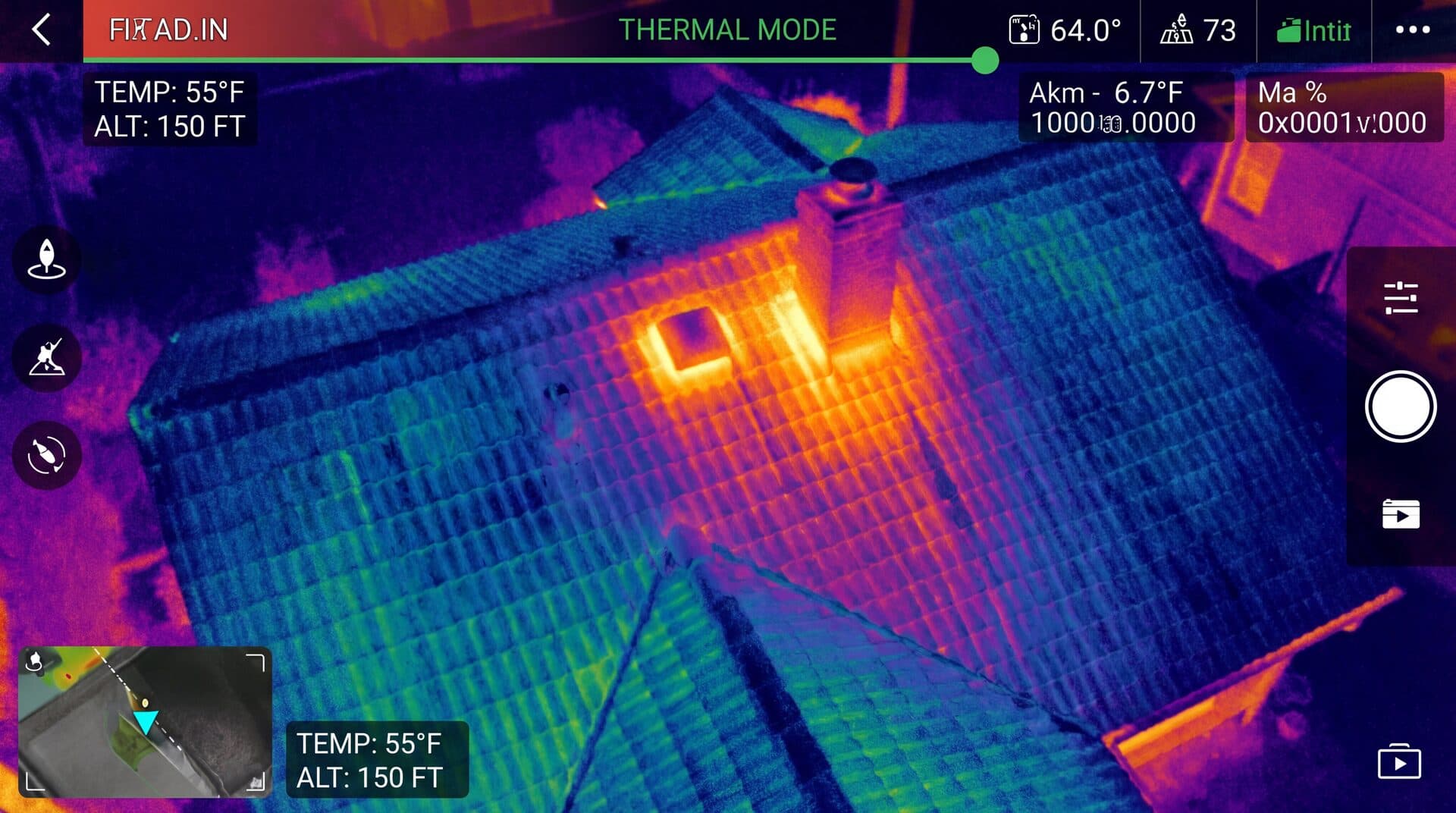
Roof Leak Detection in Exeter & Devon
Radiometric thermal imaging to pinpoint roof leaks and moisture ingress without invasive investigation.
Finding the source of a roof leak can be incredibly difficult from ground level. Our DJI Mavic 2 Enterprise Advanced carries a 640×512 radiometric thermal sensor that detects temperature differences caused by moisture ingress, pinpointing exactly where water is entering your property. Combined with 48MP visual imagery, this non-invasive approach saves time and money compared to traditional investigation methods.
What's Included
- 640×512 radiometric thermal imaging
- Pinpoint leak sources without invasive investigation
- Temperature differential mapping of entire roof
- Combined visual and thermal overlay imagery
- Ideal for flat roofs and hard-to-access areas
- Detailed thermal report with annotated images
- Recommended repair actions included
How It Works
Our straightforward process for roof leak detection.
Report the Issue
Tell us about the leak - where you've noticed water, how long it's been happening, and any other details that might help.
Thermal & Visual Survey
We fly both thermal and standard camera passes to identify moisture patterns and their likely source points on your roof.
Pinpoint Report
Your report includes thermal overlays showing exactly where moisture is present, with clear recommendations for targeted repairs.
Frequently Asked Questions
Common questions about our roof leak detection service.
How does thermal imaging detect leaks?
Does it work on all roof types?
What time of day is best for thermal surveys?
Other Services
Explore our full range of drone survey services.
Ready to Book Your Drone Survey?
Get a detailed aerial inspection of your roof without scaffolding, ladders, or risk. Contact us today for a free, no-obligation quote.