Our First Survey, St Thomas
The first drone roof survey report we produced. Water coming in on one side of a Victorian terrace, two chimney stacks, and a clear answer as to which one was doing it.
- Flown
- 21 March 2026
- Location
- St Thomas, Exeter
- Client
- Shelagh
- Milestone
- Our first survey report
What we were asked to do
Shelagh reported water getting into the property on the eastern side and asked for the general condition of the roof covering and both chimney stacks to be assessed.
This was our first drone roof inspection report, and the format it set is still the one we use: findings grouped by area, each with a severity rating, and a recommendation against every one.
Where
A mid terrace Victorian house in St Thomas, on the west side of Exeter, with a natural slate pitched roof and two chimney stacks, one east and one west.
What we flew
Flown dry and clear with a light wind. All four elevations were inspected, with overhead passes and close telephoto imagery of every area of concern, in the open category with visual line of sight kept throughout.
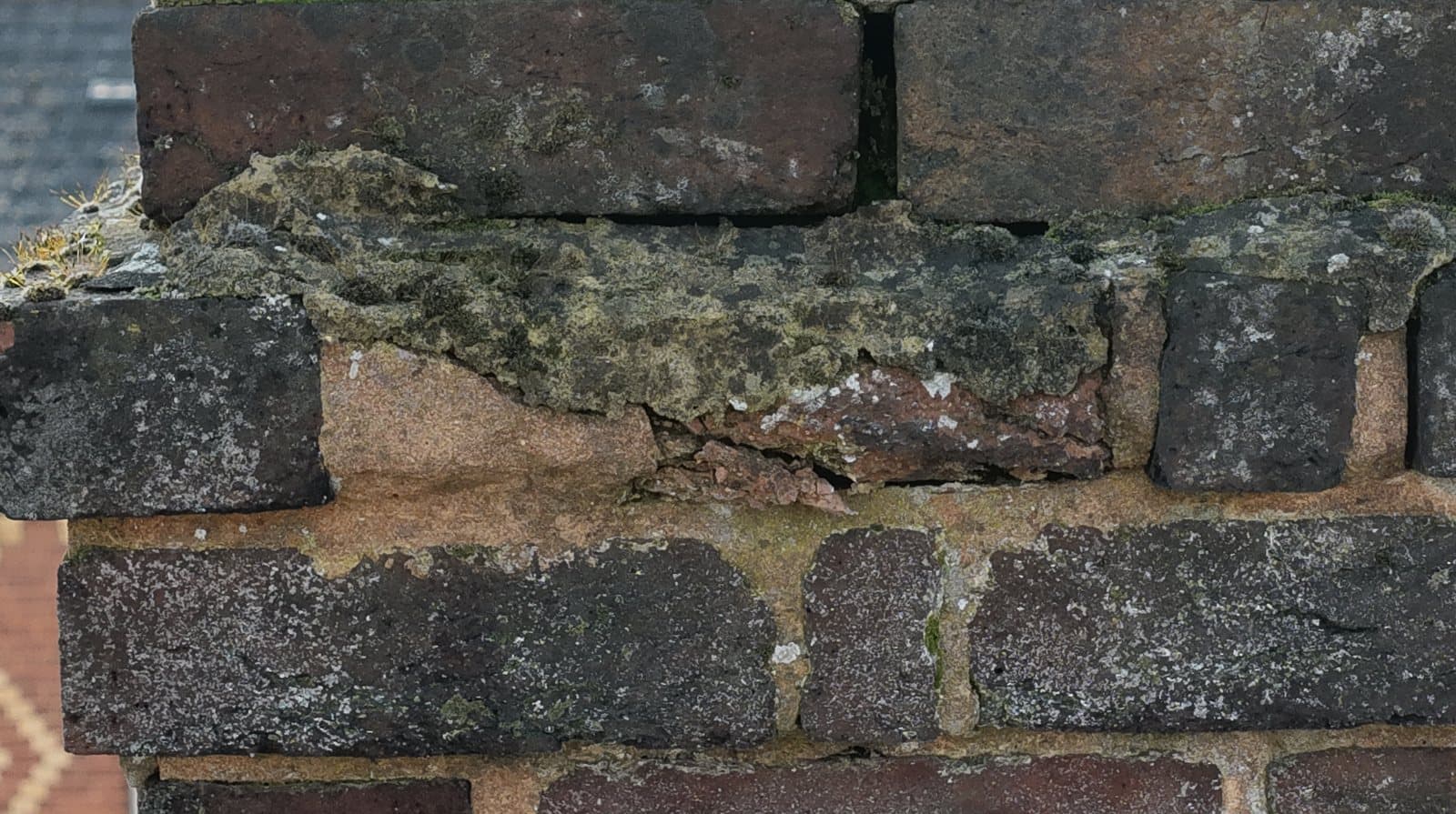
The east stack, the side the water was coming in on, was worked over from several angles: the brickwork, the head of the stack, and the point where it meets the roof.
What it achieved
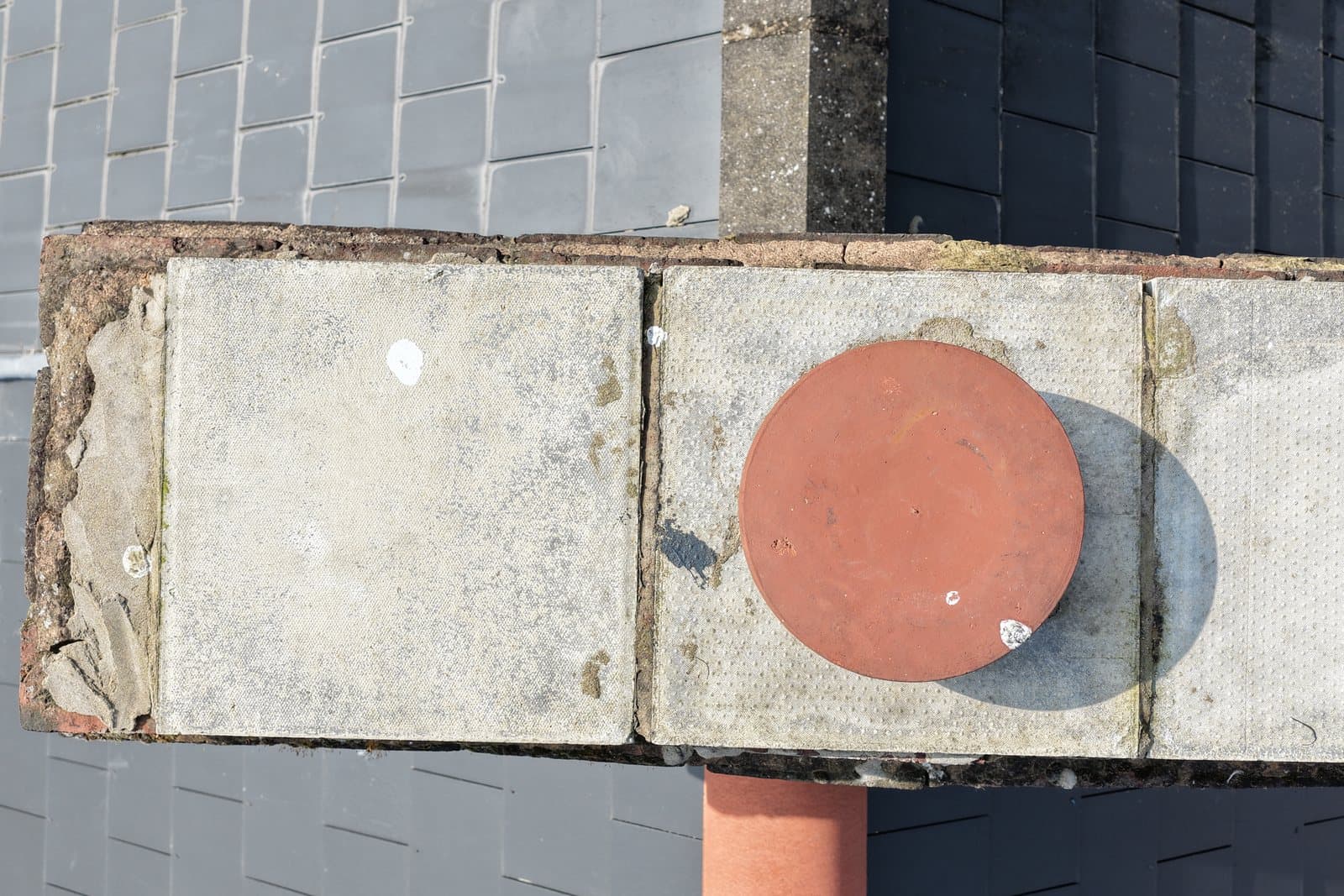
The east chimney was the answer, and it was carrying four separate defects at once. The mortar joints were severely degraded with pointing lost across the stack, leaving open joints straight into the brickwork. There was a large void under the flaunching at the head, which lets rain in at the top. The flaunching around the pot was cracked. And at the base, the cement fillet where the stack meets the roof had failed and pulled away, with no lead step flashing behind it.
The supporting evidence was on the slates below: white efflorescence staining, which is what you get when water has been tracking through masonry for a sustained period and carrying the salts out with it. The report tied all of that to the reported internal ingress and marked it urgent.
The west stack was a different story. Some weathering and early pointing deterioration, no voids and no failures, so it went down as monitor with a note to repoint it while access was already up rather than pay to mobilise twice.
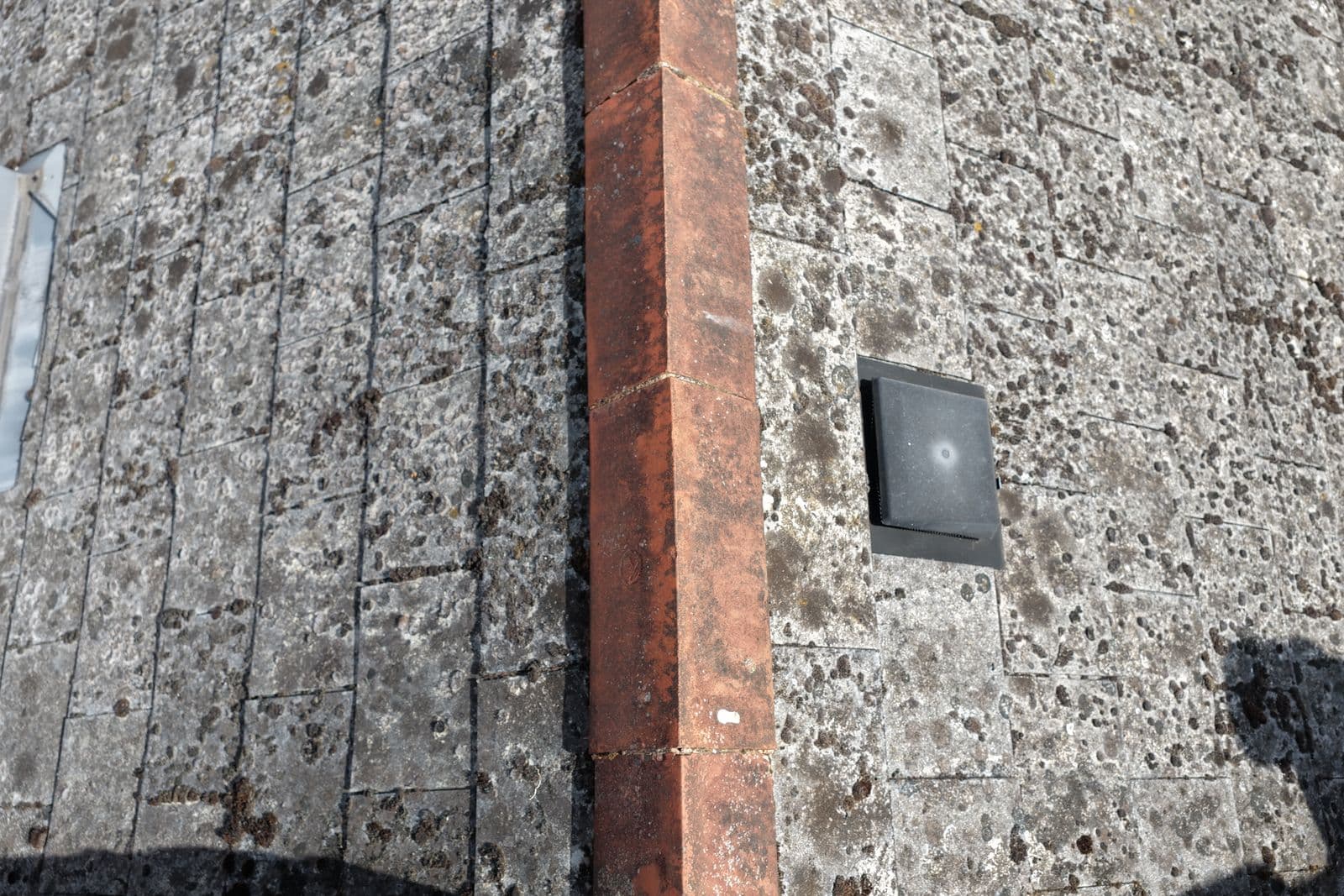
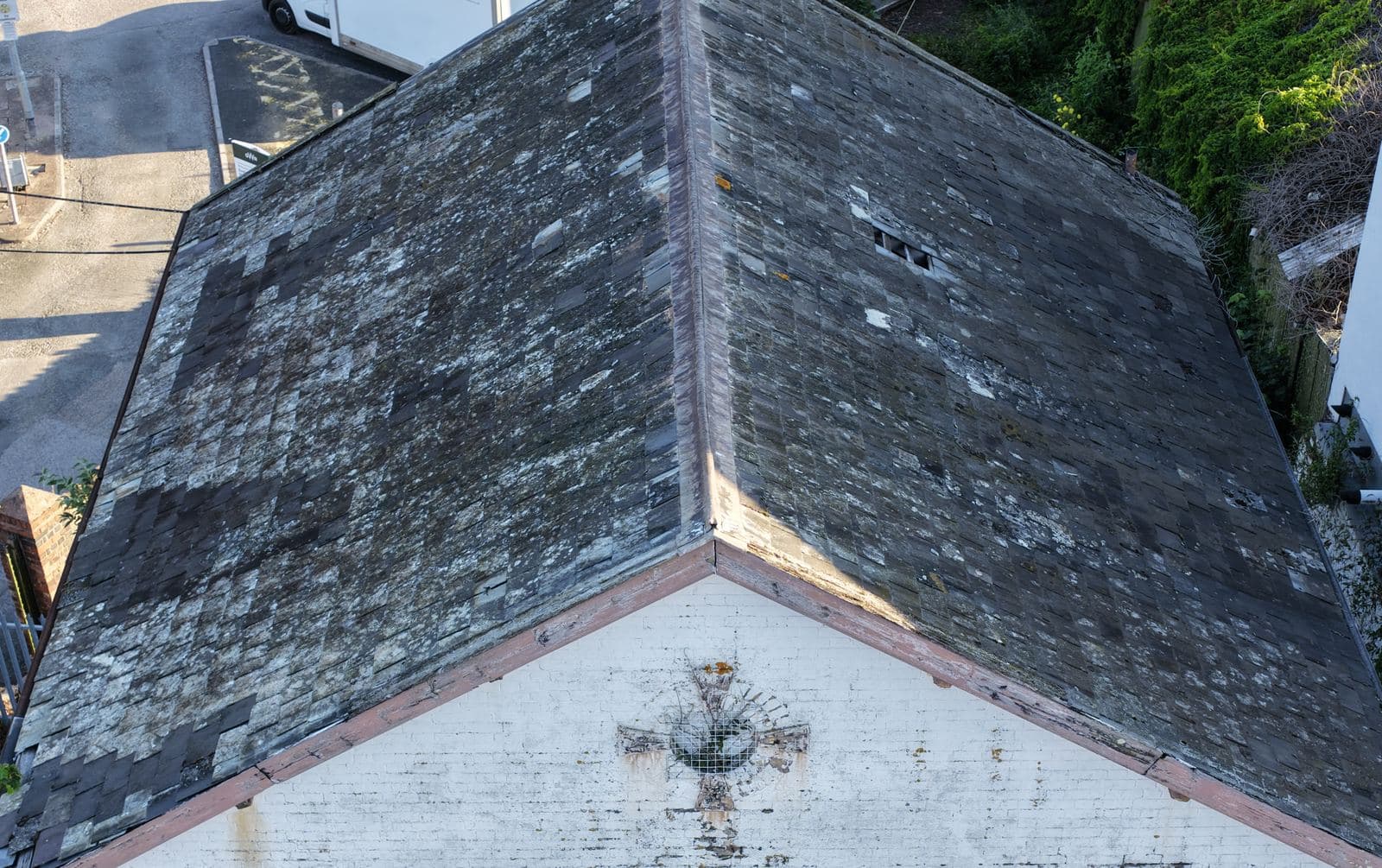
The main slate roof came back generally fair for the age of the property, with no significant slipped, cracked or missing slates and a few historical replacements visible.
One recommendation was worth as much as the findings: the whole scope could be reached with tower scaffolding and roofing ladders instead of a full scaffold. Knowing that before you get quotes changes what the job costs.
Imagery
Frames captured on the day, cropped and resized for the web.
Drone Roof Surveys
100MP aerial roof inspections without scaffolding. Detailed imagery of every tile, ridge, and flashing.
See what is includedMore Missions
Other jobs from the flight log.
Ready to Book Your Drone Survey?
Get a detailed aerial inspection of your roof without scaffolding, ladders, or risk. Contact us today for a free, no-obligation quote.